
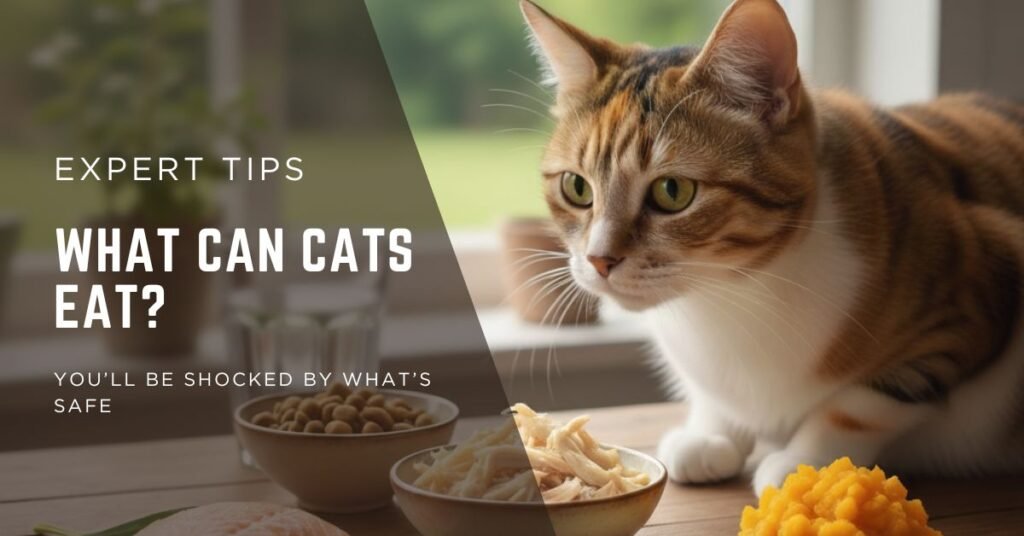
If you’ve ever caught your cat eyeing your dinner plate or trying to swipe a piece of chicken off your fork, you’re not alone. Cats are naturally curious about what we eat, and as pet owners, it’s only natural to wonder what’s safe to share.
While cats are obligate carnivores, meaning they need meat to survive, some human foods can safely complement their diet. Others, however, can be harmful or even toxic.
In this guide, we’ll walk through everything you need to know about what cats can eat, which foods to serve with caution, and which ones to keep far away from their bowl.
What human food can cats eat?
Cats rely on animal protein for most of their nutrition, but a few human foods can offer safe variety in small amounts. Think of these as occasional treats or training rewards, not meal replacements.
Meat and Protein Sources
Cats are born meat-lovers. Meat provides taurine, an essential amino acid that keeps their hearts strong and vision sharp.
Safe meats for cats include:
- Cooked chicken: Plain, boneless, and unseasoned. A small piece can make your cat’s day.
- Turkey: A lean, protein-packed option—just skip the skin and gravy.
- Beef: Cooked, lean beef can be offered as an occasional snack.
- Fish: Cooked salmon, tuna, or cod can be nutritious when served sparingly. Avoid raw fish to prevent parasites and thiamine deficiency.
- Eggs: Fully cooked eggs (scrambled or boiled) are rich in protein and B vitamins. Never serve them raw.
Pro Tip: If you wouldn’t eat it raw or undercooked, your cat shouldn’t either. Cooking destroys harmful bacteria that can make both you and your cat sick.
Anecdote: Many cat owners notice that their cats show up out of nowhere when they hear chicken sizzling. That’s fine, just make sure you set aside an unseasoned piece before adding spices.
Vegetables Cats Can Eat
Cats don’t need vegetables to stay healthy, but some can provide fiber and hydration, especially for cats prone to constipation or weight issues.
What vegetables can cats eat:
- Carrots: Cooked, soft carrots are safe and low-calorie.
- Green beans: Great for digestion and often recommended for overweight cats.
- Peas: Full of vitamins A, B, and K, peas are a common ingredient in cat food.
- Pumpkin: A natural remedy for digestive issues—serve plain, cooked pumpkin puree.
- Broccoli: Lightly steamed broccoli offers antioxidants and crunch.
Avoid seasoning vegetables with salt, garlic, or butter. Even a small amount of these can upset your cat’s stomach.
Pro Tip: Steam or boil veggies until soft, then mash them into your cat’s food for easier digestion.
Fruits Cats Can Eat
Cats can’t taste sweetness the way we do, but certain fruits can be a safe and hydrating treat.
What fruit can cats eat:
- Blueberries: Loaded with antioxidants, they make a fun, tiny snack.
- Bananas: Offer potassium and fiber, but limit to a few bites per week.
- Apples: Remove seeds and skin before serving small pieces.
- Watermelon: A summer favorite for hydration—remove rind and seeds.
- Cantaloupe: Surprisingly popular among cats, and packed with vitamins A and C.
Pro Tip: Cut fruit into tiny pieces to avoid choking hazards, and always remove seeds, pits, and rinds.
Anecdote: Some cats will ignore fruit entirely, while others will bat a blueberry across the floor before finally taking a nibble. Both reactions are perfectly normal.
Avoid citrus fruits (like oranges and lemons) and grapes or raisins, they’re all toxic to cats.
Cooked Grains and Dairy Alternatives
Cats don’t need carbs, but some grains are safe in moderation, especially if your cat has an upset stomach.
- Rice: Plain, cooked white rice can ease diarrhea or stomach irritation.
- Oatmeal: Provides fiber and protein; serve plain and unsweetened.
- Quinoa: A good gluten-free option with amino acids.
- Dairy-free yogurt: A spoonful of lactose-free or coconut-based yogurt can support gut health.
Pro Tip: Skip regular cow’s milk and cheese. Most adult cats are lactose intolerant, which can lead to gas or diarrhea.
Human foods that should be given with caution
Some foods fall into the “sometimes” category—not toxic, but potentially irritating or nutritionally unbalanced if fed too often.
Fish and Shellfish
While cats love fish, overdoing it can lead to nutrient deficiencies. For example, tuna lacks essential nutrients and can cause mercury buildup over time.
Cooked shrimp or crab can be an occasional high-protein snack, but only if it’s plain, no butter, seasoning, or sauce.
Pro Tip: Treat fish as a special meal topper, not a diet staple. Rotate proteins to keep your cat’s nutrition balanced.
Dairy Products
Many cats enjoy the smell and taste of dairy, but their digestive systems don’t handle lactose well after kittenhood. A lick of cheese or a small spoon of plain yogurt may be fine, but too much can cause bloating and diarrhea.
If your cat loves milk, choose specially formulated cat milk found in pet stores—it’s lactose-free and gentle on their stomach.
Vegetables with Mild Irritants
Spinach and kale are nutritious but contain oxalates, which can contribute to urinary tract issues in sensitive cats. Offer them rarely and in small quantities.
Processed or Fatty Meats
Ham, bacon, and sausage are high in salt and fat. Too much sodium can dehydrate cats and stress their kidneys, while fatty foods can lead to pancreatitis.
Stick to lean, cooked meats with no seasoning or sauces.
What can cats not eat?
Some human foods can be dangerous or even deadly to cats. Even a small amount can cause severe reactions, so it’s best to memorize this list of no-go foods.
Toxic Foods for Cats
Onions and Garlic:
These destroy red blood cells and can lead to anemia. This includes raw, cooked, or powdered forms.
Chocolate and Caffeine:
These Two contains theobromine and caffeine, which can cause tremors, irregular heartbeat, or even death of your cat.
Grapes and Raisins:
Linked to sudden kidney failure in cats—avoid entirely.
Alcohol and Raw Dough:
Both can lead to alcohol poisoning and liver damage. Even a small lick can be life-threatening.
Avocado:
it Contains persin, which is the main cause of vomiting and diarrhea in cats.
Xylitol:
This artificial sweetener (found in gum and candy) can cause insulin spikes and liver failure.
Raw Meat, Eggs, and Fish:
Raw foods carry bacteria like salmonella and E. coli, which can make cats and humans sick.
Pro Tip: When in doubt, skip sharing. A quick call to your vet can save your cat from a dangerous reaction.
Dangerous Plants for Cats
Many cats enjoy chewing on leaves, but not all plants are safe.
Toxic plants include:
- Lilies (extremely dangerous—even one leaf can cause kidney failure)
- Aloe vera
- Pothos
- Dieffenbachia (Dumb Cane)
- Philodendron
Safe alternatives: Catnip, cat grass, and valerian are perfect for satisfying that chewing instinct without risk.
What human food can kittens eat?
Kittens grow quickly and need a diet rich in protein and calories. While human foods can be tempting, they should remain a tiny supplement to balanced kitten food.
Safe foods for kittens:
- Cooked chicken or turkey: Soft, finely shredded, and unseasoned.
- Scrambled eggs: A gentle, digestible source of protein.
- Pumpkin puree: Helps ease digestive changes during weaning.
- Tiny bits of banana or apple: Only as rare treats.
Avoid giving kittens dairy, raw foods, or anything high in salt or fat. Their stomachs are delicate, and even mild irritation can cause dehydration.
Pro Tip: Introduce new foods one at a time, and watch for reactions like vomiting or loose stools.
Key Takeaways
- Cats are obligate carnivores, so meat should be their main source of nutrition.
- Some fruits and vegetables like peas, carrots, and pumpkin can be safe in moderation.
- Always cook meats thoroughly and serve plain.
- Avoid toxic foods such as onions, garlic, grapes, chocolate, and alcohol.
- Limit dairy, processed meats, and salty snacks.
- Introduce new foods slowly, and always consult your vet if unsure.
A healthy diet keeps your cat’s coat shiny, their energy high, and their personality just as playful as ever.
Conclusion
Sharing food with your cat can be a fun way to bond, but it’s important to know where to draw the line. Cats have unique nutritional needs, and even well-meaning treats can sometimes do more harm than good.
Stick with safe, plain meats and the occasional fruit or veggie snack, and always keep their primary diet cat-specific.
If you’re ever in doubt, remember: moderation, simplicity, and vet guidance are your best tools for keeping your feline friend healthy.
And while you’re here, explore CatifyNext’s Cat Name Generator to find the perfect name that matches your cat’s one-of-a-kind personality—it’s a fun way to celebrate your furry companion while learning more about what makes them special.
FAQs
Can cats eat cheese?
Yes, but only in very small amounts. Most cats are lactose intolerant, so limit cheese to rare treats.
Can cats eat eggs?
Absolutely—cooked eggs are safe and full of protein. Avoid raw eggs to prevent bacteria exposure.
Can cats eat rice?
Plain, cooked rice can help settle an upset stomach. Avoid seasoning or added oils.
Can cats eat peanut butter?
It’s not toxic, but it’s high in fat and sugar. A lick or two is fine, but it shouldn’t be routine.
Can cats eat bread?
Plain bread isn’t harmful but doesn’t offer much nutrition. Skip flavored or doughy varieties.
