
You’re chopping broccoli for dinner, and suddenly a tiny paw swipes at a floret that rolls off the cutting board. Your cat sniffs it, bats it around, and looks up at you with those curious eyes. Now you’re wondering — is it actually safe for them to eat this?
It’s a perfectly reasonable question. As cat owners, we want to share life’s little moments with our furry companions, and that sometimes includes food. But cats have very different digestive systems from ours, so what’s healthy for us is not always healthy for them.
The good news? Broccoli is one of the few vegetables that is actually safe for cats. But there are important things you need to know before you toss a floret into your cat’s bowl. Let’s break it all down.
Quick Overview
Yes, cats can eat broccoli. It is not toxic to them, and in small amounts it can even offer a few minor health benefits. However, cats are obligate carnivores, which means their bodies are built to run on animal-based protein. Broccoli does not replace any part of their core diet. It is simply an occasional, safe treat. The key rules are: keep portions small, prepare it plain with zero seasonings, and serve it cooked or chopped into tiny pieces to avoid choking. Kittens, senior cats, and cats with sensitive stomachs should be given broccoli with extra caution. Always check with your vet before introducing any new food.
Can My Cat Eat Broccoli?
Yes, your cat can eat broccoli. It is not on the list of toxic foods for cats, so there is no need to panic if your cat nibbles on a small piece.
That said, “safe” does not automatically mean “beneficial.” Cats are obligate carnivores, meaning their entire nutritional foundation is built on meat. Their bodies are not designed to extract much nutrition from plant-based foods. Broccoli, while packed with vitamins and minerals that are great for humans, offers limited nutritional value to a feline.
So why even give it to them at all? Because some cats genuinely enjoy the crunch or smell of broccoli, and as an occasional treat it adds a little variety without any real risk. It is low in calories, low in fat, and has some fiber that may support digestion in small amounts.
Just remember: broccoli should never take up more than 10% of your cat’s daily food intake. Their primary diet should always consist of high-quality, protein-rich cat food. If you are ever curious about what else is safe to feed your cat, our full guide on what cats can eat is a great starting point.
What If My Kitten Eats Broccoli?
If your kitten accidentally nibbles on a small piece of plain broccoli, there is generally no cause for alarm. Broccoli is not toxic to kittens.
However, kittens have much smaller and more sensitive digestive systems compared to adult cats. Their gut is still developing, and even small amounts of fibrous vegetables can cause loose stools, gas, or stomach upset. For this reason, it is best to hold off on giving broccoli intentionally to very young kittens.
If your kitten ate a tiny piece and seems perfectly fine afterward, monitor them for the next several hours. Watch for signs like vomiting, diarrhea, or loss of appetite. If any of these appear, consult your vet. For older kittens around six months and above, a very small bite of plain cooked broccoli here and there is unlikely to cause harm, but it still should not become a regular part of their diet.
Is Broccoli Good for Cats?
Broccoli is not harmful to cats, and it does carry a few modest benefits when served in appropriate amounts. Here is a closer look at what broccoli actually contains and how it may affect your cat.
Broccoli is rich in fiber, which can support healthy digestion. If your cat experiences occasional constipation, the soluble fiber in broccoli can gently help move things along. On the flip side, too much fiber can cause diarrhea, so balance is key.
Broccoli also contains antioxidants, which help fight free radicals in the body. Free radicals are linked to cell damage, inflammation, and even tumor development. While cats cannot absorb all of broccoli’s antioxidants as efficiently as humans can, some beneficial compounds do get absorbed.
Vitamin K is present in broccoli in significant quantities. This vitamin plays a role in blood clotting, which is important for wound healing and overall vascular health.
Broccoli also has a high water content, which can contribute slightly to your cat’s daily hydration. Cats are often not great at drinking enough water on their own, so moisture from food sources can be helpful.
One important limitation: cats cannot convert beta-carotene from broccoli into Vitamin A the way humans can. So while broccoli looks nutritionally impressive on paper, much of that value simply does not translate for your feline.
Think of broccoli as a low-risk, low-reward addition to your cat’s treat rotation. It will not hurt them, and it may offer a small nutritional bonus, but it is not a superfood for cats the way it might be for us.
How Much Broccoli Can Cats Eat?
Less is definitely more when it comes to broccoli for cats.
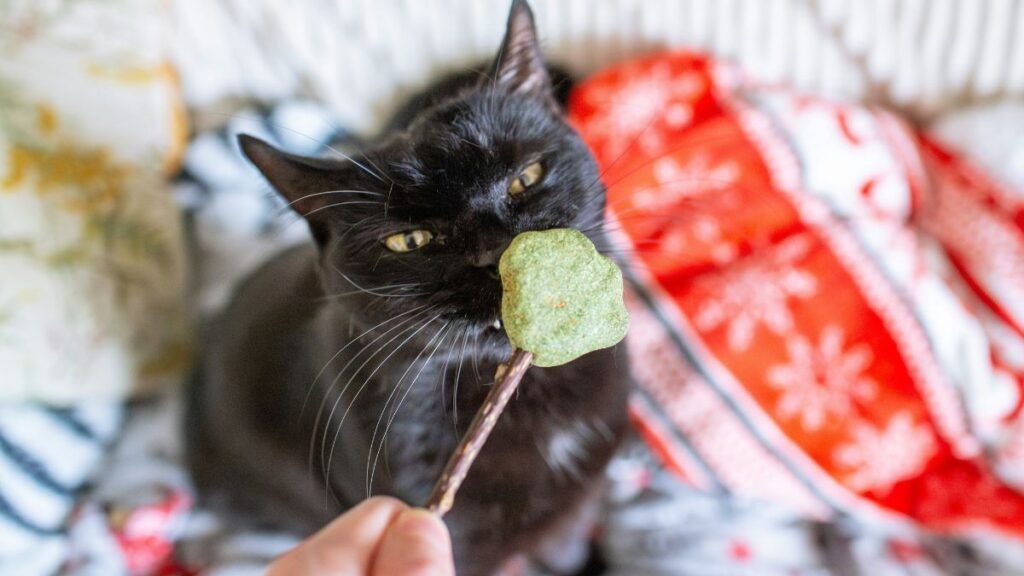
A safe starting amount is roughly the size of your pinky nail. That is a very small piece, but it is the right approach when introducing any new food to your cat for the first time. Give them that tiny amount and then wait 24 hours to observe how their body responds.
If there are no signs of digestive upset such as vomiting, diarrhea, gas, or bloating, you can gradually increase the serving size. A reasonable ongoing portion is roughly a single small floret, cooked and chopped into bite-sized pieces. Broccoli treats should be offered no more than once or twice per week.
As a general rule, treats of any kind should not exceed 10% of your cat’s total daily caloric intake. Because broccoli is very low in calories, 10% may seem like a lot, but the fiber content is the actual limiting factor. Too much fiber from broccoli can disturb the balance of your cat’s digestive system and interfere with their appetite for the meaty food they truly need.
If you notice your cat turning away from their regular food after eating broccoli, cut back or stop offering it altogether.
How To Safely Prepare Broccoli for Cats
Preparation matters just as much as the portion size. Even a cat-safe food can become problematic if it is not prepared correctly.
Here is the safest way to prepare broccoli for your cat:
Cook it first. Raw broccoli is not toxic, but it is harder for cats to digest and can be a choking hazard, especially for smaller cats and kittens. Steaming or baking broccoli is the best method because it softens the texture while preserving more of the nutrients. Boiling is also acceptable if that is more convenient, though it does leach out some of the vitamins into the water.
Keep it completely plain. This is the most critical rule. No butter, no oil, no salt, no garlic, no onion, no cheese sauce, and no seasoning of any kind. Many common food additions that we use to make broccoli taste better are actually toxic to cats. Garlic and onion in particular are dangerous for felines even in small amounts.
Chop it into small pieces. Even after cooking, broccoli can still present a choking risk if the pieces are too large. Cut it into small, manageable bites that your cat can easily chew and swallow.
Can cats eat broccoli raw? Yes, but cooked is safer. If you do offer raw broccoli, make sure it is chopped into very tiny pieces.
Can cats eat broccoli stems? Yes, broccoli stems are safe for cats. The stems contain the same nutrients as the florets. However, stems are much tougher in texture, so they should always be cooked until soft and then chopped well before serving.
Can cats eat broccoli leaves? Yes, the leaves are also non-toxic and safe. They tend to be softer than the stems, but the same preparation rules apply.
Can cats eat broccoli and cheese? No. While a tiny amount of plain broccoli is fine, adding cheese or a cheese sauce makes it unsafe. Many cats are lactose intolerant, and rich dairy products can cause digestive upset. You can learn more about this in our detailed guide on whether cats can eat cheese.
Can cats eat broccoli cheddar soup? Definitely not. This type of soup usually contains milk, cream, high amounts of salt, onion powder, and other ingredients that are harmful to cats. It should never be shared with your pet.
Can cats eat broccoli and carrots? Carrots are also safe for cats in small amounts, so a tiny mix of plain cooked broccoli and carrots as an occasional treat is fine.
Can cats eat broccoli and rice? Plain cooked rice is generally considered safe for cats and is sometimes recommended for soothing an upset stomach. A small amount of plain cooked broccoli mixed with plain rice would not be harmful, though neither provides much nutritional value for your cat compared to their regular cat food.
Other Foods to Feed Your Cat
Since cats are obligate carnivores, the best treats to offer are always protein-based. Here are some cat-friendly options worth knowing about:
Cooked chicken or turkey is one of the safest and most popular options. It is lean, high in protein, and most cats absolutely love it. Always serve it plain, boneless, and fully cooked.
Cooked fish such as salmon or tuna can be a tasty occasional treat. Avoid fish that has been seasoned, smoked, or canned with added salt or oil.
Plain cooked shrimp is another protein-rich treat that many cats enjoy. Our guide on whether cats can eat shrimp covers everything you need to know before serving it.
Plain cooked eggs are also safe and nutritious for cats in small amounts.
On the flip side, some human foods can be genuinely dangerous for cats. Grapes and raisins, for example, are toxic and should be kept completely away from your cat. You can read more about why in our article on whether cats can eat grapes. Chocolate is another food that is extremely toxic to cats, and even small amounts can cause serious harm. Our full breakdown is available in our post on whether cats can eat chocolate.
Other foods to avoid include tomatoes, especially the unripe ones and the leaves and stems of the tomato plant. We covered this topic in depth in our guide on whether cats can eat tomatoes.
If you are ever unsure about a specific food, it is always worth checking before offering it. A quick look at a trusted resource or a call to your vet can save your cat from unnecessary discomfort or harm.
Final Thoughts
So, can cats eat broccoli? Yes, they can. It is safe, non-toxic, and in the right amounts it can even be a mildly beneficial snack. But it is far from essential, and it should never replace the high-protein diet that cats genuinely need to thrive.
The golden rules are simple: serve it plain, cook it before offering, chop it into small pieces, and keep the portions small. If your cat tries a piece and enjoys it, a little broccoli here and there as part of a balanced treat rotation is perfectly fine.
If your cat shows no interest in broccoli at all, that is equally fine. Cats are picky by nature, and there are plenty of other safe, nutritious treats they might prefer. The most important thing is always their overall health, hydration, and a well-rounded, protein-rich diet.
When in doubt, talk to your vet. Every cat is a little different, and your vet can give you personalized guidance based on your cat’s age, weight, and health history.
Frequently Asked Questions
Is broccoli toxic to cats?
No, broccoli is not toxic to cats. It is one of the few vegetables that is considered safe for feline consumption. As long as it is served plain, cooked, and in small portions, it poses no danger to your cat.
Can cats eat broccoli every day?
It is not recommended. Even though broccoli is safe, feeding it daily could lead to too much dietary fiber, which may cause digestive issues such as gas, loose stools, or stomach discomfort. Once or twice a week as an occasional treat is more than enough.
Why does my cat want to eat broccoli?
Cats are naturally curious creatures and are often attracted to foods simply because their owner is eating them. Some cats may also be drawn to the texture or scent of broccoli. This curiosity is completely normal and does not mean your cat has a nutritional deficiency.
What happens if a cat eats too much broccoli?
Eating too much broccoli can cause gastrointestinal upset in cats. Symptoms may include vomiting, diarrhea, gas, bloating, or a reduced appetite for their regular food. If these symptoms appear after your cat eats broccoli, stop offering it and consult your vet if the symptoms persist.
Can cats eat frozen broccoli?
Frozen broccoli is generally safe for cats as long as it is fully thawed and cooked before serving. Never offer frozen broccoli straight from the freezer, as the cold temperature and hard texture can be uncomfortable and even hazardous. Also check the packaging to ensure there are no added seasonings or sauces, as many frozen vegetable products contain salt or other additives.
Can senior cats eat broccoli?
Senior cats can eat small amounts of plain cooked broccoli, but extra caution is advised. Older cats often have more sensitive digestive systems and may also have dental issues that make chewing difficult. Always ensure the broccoli is very soft, well-cooked, and chopped into tiny pieces before offering it to an older cat. When in doubt, check with your vet first.
