
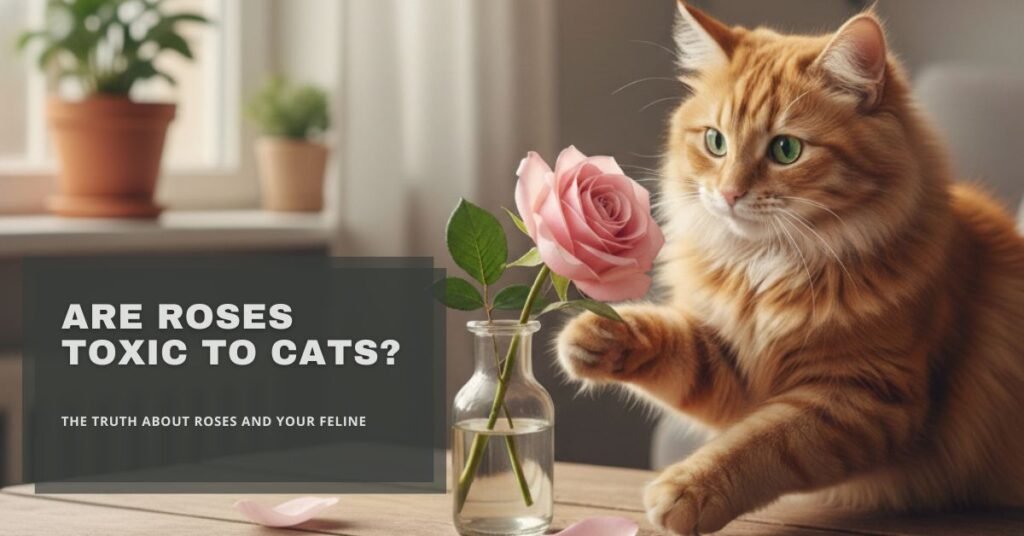
Roses are timeless symbols of love and beauty, often brightening our homes and gardens. But if you share your space with a curious cat, you may wonder: are roses toxic to cats?
Are Roses Toxic to Cats?
My cat Luna has this thing where she thinks every plant in my apartment is personally offending her.
Succulents? She knocks them over. Spider plants? She chews the tips off. So when my boyfriend brought home roses for our anniversary, I literally grabbed them before Luna could launch her attack.

But then I stopped. Wait, are roses even safe for cats?
I’d heard mixed things. Some people said roses were fine. Others swore they were dangerous. And honestly? I didn’t want to find out the hard way.
So I did what any anxious cat parent would do. I went down a research rabbit hole at midnight while Luna stared at those roses like they were her mortal enemies.
Turns out, the answer isn’t as simple as yes or no. Let me share what I learned so you don’t have to panic Google at midnight like I did.
If your cat’s quirky habits keep you guessing, you’ll love our post on why your cat licks you. It explains what your feline’s affectionate (and sometimes confusing) grooming behavior really means.
Are Roses Safe for Cats?
Here’s the relief you’re probably looking for. Real roses, the ones from the Rosa family, won’t poison your cat.
”According to the ASPCA, true roses are non-toxic to cats. So if your kitty decides to take a bite out of those Valentine’s Day flowers, you don’t need to rush to the emergency vet immediately.”
But hold up. Before you let your cat have free reign around your rose garden, there’s more to this.
Non-toxic doesn’t mean harmless. It’s kind of like saying french fries aren’t toxic to humans. Sure, they won’t poison you, but eating a whole bucket probably isn’t great either.
Cats are obligate carnivores. Their entire digestive system is built to handle meat, not plants. When they eat stuff like rose petals or leaves, their stomach basically throws up its hands and says “I don’t know what to do with this.
The result? Your cat might puke it back up. Or have diarrhea. Neither is fun for you or them.
Speaking of cat instincts, ever wondered why your cat might lick you like you’re part of their pack? Check out our guide on why cats lick you to understand this adorable (and slightly weird) behavior.
Most of the time, it’s just uncomfortable and messy. Not life threatening, but definitely not pleasant.
The real problems with roses come from three things: sharp thorns that can stab your cat, pesticides and chemicals sprayed on the flowers, and sneaky impostor plants that aren’t really roses at all.
Let me break down the specific types you might be wondering about.
Are mini roses toxic to cats? Nope. Mini roses are just smaller versions of regular roses. Same plant family, same safety profile.
What about rose petals toxic to cats? The petals themselves are safe, but here’s the catch. Store bought roses have usually been doused in chemicals. Those chemicals? Not safe at all.
Are garden roses toxic to cats? The roses themselves are fine. But if you’ve been spraying them with pesticides to keep the aphids away, that’s a whole different story.
Pink roses toxic to cats? The color literally doesn’t matter. Pink, red, white, yellow, or that weird blue dyed color. If it’s a real rose, the color won’t change whether it’s safe or not.
And dried roses toxic to cats? Still safe from a toxicity standpoint. But those thorns don’t get any less sharp when they dry out.
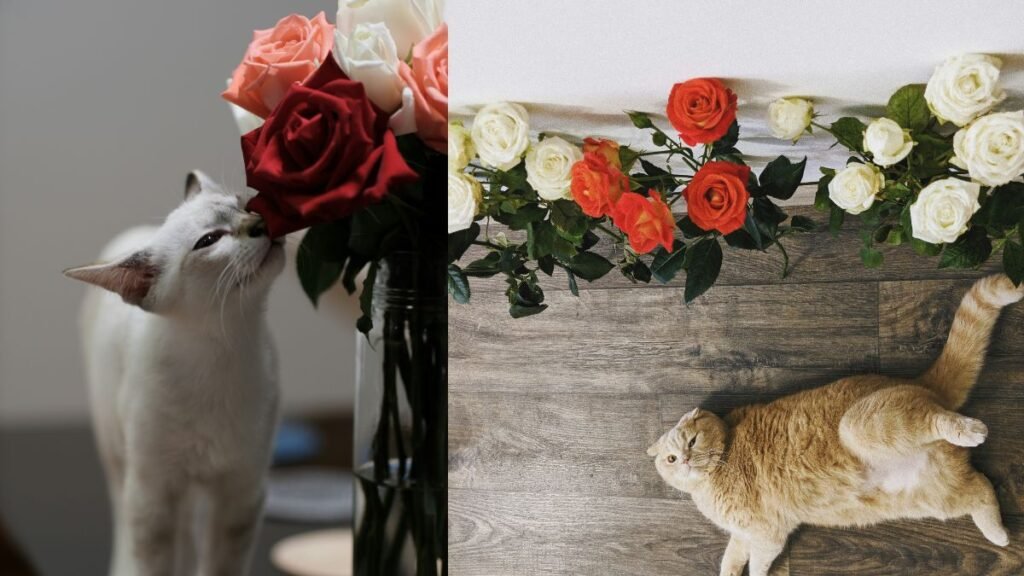
My Cat Ate Roses. What Do I Do?
Okay, so you just caught your cat red pawed with rose petals everywhere. Maybe there’s a telltale petal stuck to their whisker. What now?
First thing: don’t freak out. I know that’s easier said than done, but panicking won’t help your cat.
Try to figure out exactly what they ate. Just the soft petals? The leaves? Did they go full destruction mode and chew on the thorny stems too?
If you can, check your cat’s mouth. Look for any cuts, bleeding, or swelling. Rose thorns are seriously sharp and can do real damage to the soft tissue inside their mouth.
I’ll be honest though. Good luck getting your cat to let you examine their mouth if they’re not in the mood. Mine acts like I’m trying to perform surgery when I just want to check her teeth.
Now here’s the most important question: where did those roses come from?
This matters so much more than most people realize.
Grocery store roses or florist bouquets have been treated with everything under the sun. Pesticides during growing. Preservatives for shipping. Sometimes dyes to make the colors more vibrant. All that stuff can make your cat seriously sick.
If your cat ate roses from a store, call your vet. Don’t wait to see if symptoms develop. Just call.
Garden roses are usually lower risk, but you still need to think about what you’ve used on them. Any fertilizer? Bug spray? Fungicide for black spot disease?
For the next 24 hours, watch your cat like a hawk. Keep an eye out for:
- Vomiting more than twice
- Diarrhea that won’t quit
- Acting super lethargic or just not themselves
- Drooling way more than normal (we’re talking excessive, not just regular cat drool)
- Any breathing issues
- Wobbling or seeming uncoordinated
- Shaking or tremors
Most cats who eat a few untreated rose petals end up completely fine. Maybe a little nauseated, but nothing serious.
But if you see any of those warning signs, get to the vet immediately. When it comes to your cat’s health, it’s always better to overreact than underreact.
Once your cat’s safe and back to their usual mischievous self, why not celebrate their personality with the perfect name? Try our fun Cat Name Generator, it’s designed to help you find names that match your cat’s unique quirks and charm.
Other “Roses” That Are Toxic to Cats
Alright, this is where things get really important and honestly kind of scary.
Not every plant with rose in its name is actually a rose. Some of these imposters are seriously dangerous to cats.
Desert Rose tops the danger list. This plant is gorgeous, I’ll give it that. But it’s absolutely poisonous to cats.
It contains these things called cardiac glycosides that mess with your cat’s heart rhythm. We’re talking severe vomiting, intense diarrhea, excessive drooling, irregular heartbeat, and potentially death.
If your cat gets into Desert Rose, this is a genuine emergency. Drop whatever you’re doing and get to an emergency vet immediately.
Christmas Rose (also called Hellebore) is another bad one. It causes severe digestive issues, tons of drooling, and can affect your cat’s heart too.
Rose of Sharon will make your cat miserable with vomiting and diarrhea. It’s not quite as dangerous as Desert Rose, but it’s still not something you want your cat munching on.
Primrose can upset your cat’s stomach and irritate their skin if they touch it.
Rosebay includes plants like Rhododendrons and Oleander. Both are extremely toxic. They can cause tremors, seizures, heart problems, breathing issues, and yes, they can be fatal.
The lesson here? If you’re not absolutely certain a plant is a true Rosa species, keep it away from your cat.
Rose Leaves and Rose Petals
Real rose leaves and petals from actual roses won’t poison your cat, but they might cause some tummy troubles.
The petals are soft and smell nice to us. Some cats seem interested in batting them around or taking a nibble. Others completely ignore them.
My cat Luna? She’s more interested in destroying them than eating them. It’s like a game to her.
Rose leaves are tougher and more fibrous. Most cats take one bite, decide the texture is awful, and move on with their lives.
If your cat does eat some, you’ll probably be cleaning up cat vomit later. It’s just their body rejecting food it’s not designed to process.
The real issue isn’t the rose petals or leaves themselves. It’s what’s been put on them.
Roses from your backyard that you haven’t treated? Pretty safe.
Roses from a florist or grocery store? Those have been treated with who knows what. Pesticides, preservatives, dyes, growth regulators. None of that is meant to be eaten by cats.
Commercial flower operations use tons of chemicals to keep roses looking perfect from the farm to the vase. Your cat’s stomach doesn’t care how pretty those chemicals make the roses. It just knows they’re toxic.
Rose Thorns
Let’s talk about the actual physical danger of roses.
Those thorns evolved to protect the plant from animals. And they’re really good at their job.
I learned this the hard way when I was trimming roses without gloves. One thorn went straight through my fingernail. Not fun.
For cats, thorns are even more dangerous because they use their mouths to explore things.
Your cat sees that rose stem dangling off the table. Looks like a toy, right? They take a swat and suddenly there’s a thorn embedded in their paw pad.
Or worse, they try to chew on the stem. Rose thorns can puncture the roof of their mouth, their tongue, their gums, or their cheeks.
These puncture wounds get infected really easily. And because of all that fur, you might not even notice the wound until it’s already red and swollen.
My friend’s Persian got a thorn stuck in her lip once. They didn’t find it for three days because of how fluffy she is. By then it had already started to abscess.
If your cat gets poked by a thorn, clean the area gently with a cat safe wound cleaner. Check it every day for signs of infection.
Watch for redness, swelling, discharge, or your cat obsessively licking the spot. Any of those signs mean it’s time for a vet visit.
And listen, if a thorn gets anywhere near your cat’s eye, that’s an immediate emergency. Eye injuries can go from bad to catastrophic incredibly fast. Don’t mess around with that.
Pesticides and Flower Food
This is honestly what scares me the most about roses and cats.
The actual rose plant? Not the problem. All the stuff we humans put on roses? That’s what’ll hurt your cat.
Garden centers sell every pesticide imaginable. Stuff to kill aphids, Japanese beetles, prevent black spot, make them bloom bigger. Most of these products are toxic to pets.
Picture this scenario. You spray your roses on Saturday morning. Your cat goes outside Saturday afternoon, walks through the garden, then comes inside and licks their paws clean.
Congratulations, your cat just ingested pesticides.
Symptoms of pesticide poisoning include excessive drooling, vomiting, diarrhea, muscle tremors, weakness, breathing problems, and seizures.
This is not a wait and see situation. This is a get to the vet right now situation.
Then there’s that little packet of flower food that comes with bouquets.
You know the one. You’re supposed to mix it in the vase water to keep flowers fresh longer.
But what happens when your cat drinks from that vase? Or gets some on their paws and licks it off?
Those packets contain chemicals designed to preserve cut flowers. They’re not meant to be consumed by living creatures.
How to actually protect your cat?
If you grow roses, go organic. There are plenty of pet safe pest control options out there.
Never use flower food in vases if you have cats. Just change the water every day instead. It’s not that hard.
Put bouquets somewhere your cat genuinely cannot reach. And I mean really cannot reach. Remember, cats can jump like five times their height.
If you absolutely must spray something in your garden, keep your cats inside for at least 48 hours afterward.
Clean up any spilled vase water immediately.
Consider putting flowers in a room you can close off completely when you’re not home.
The real danger isn’t the roses. It’s what we do to them.
Conclusion
So what’s the final answer? Are roses toxic to cats?
The short version: no, true roses aren’t poisonous to cats.
But real life is messier than simple yes or no answers, right?
Actual roses from the Rosa family won’t poison your cat. But thorns can injure them. Pesticides can make them seriously sick. And fake “roses” can actually kill them.
The key is being smart and cautious. Know where your roses came from. Know what’s been sprayed on them. Keep an eye on your curious cat. When you’re unsure, just keep the roses somewhere your cat can’t get to them.
Your cat’s safety is worth way more than having pretty flowers on your coffee table.
Here at CatifyNext, we’re all about helping you create the best possible life for your feline friend. Whether you’re choosing the perfect name for your new kitten or figuring out how to keep them safe around everyday household items, we’ve got your back.
Just remember this. Your cat depends on you to keep them safe. Now you know exactly how to do that when it comes to roses.
Trust your instincts. When something feels risky, it probably is. Better to be overly cautious than dealing with a vet emergency at 2am.
Frequently Asked Questions
Yes, cats can be around true roses safely. The Rosa plant itself isn’t toxic to cats at all. However, you need to be careful about thorns that could injure your cat and any pesticides or chemicals on the flowers. Roses from stores are riskier than untreated garden roses because of all the chemical treatments they go through.
Nothing bad will happen if your cat just sniffs a rose. Smelling roses is completely safe for cats. The problems only start if they actually eat parts of the plant, get stabbed by thorns, or ingest chemicals that were sprayed on the roses. So let them sniff away.
No, rose stems from true roses aren’t poisonous at all. But they do have those super sharp thorns that can hurt your cat’s mouth, paws, face, or even eyes. The thorns are way more dangerous than any part of the actual plant itself. If your cat chews a rose stem, definitely check their mouth for any injuries or bleeding.
Lilies are hands down the most dangerous flowers for cats. Even tiny amounts of any part of a lily can cause severe kidney failure and death in cats. Other really toxic flowers include tulips, daffodils, azaleas, oleander, and Desert Rose (which isn’t a true rose). Always research any flowers before bringing them into a home with cats.
Some cats might nibble on rose petals out of curiosity, but most cats aren’t particularly interested in them. Cats are obligate carnivores, so they don’t naturally crave plant material like some other animals do. If your cat does eat rose petals, they’ll probably just get a minor upset stomach. The bigger concern is whether those petals were treated with toxic chemicals.
