
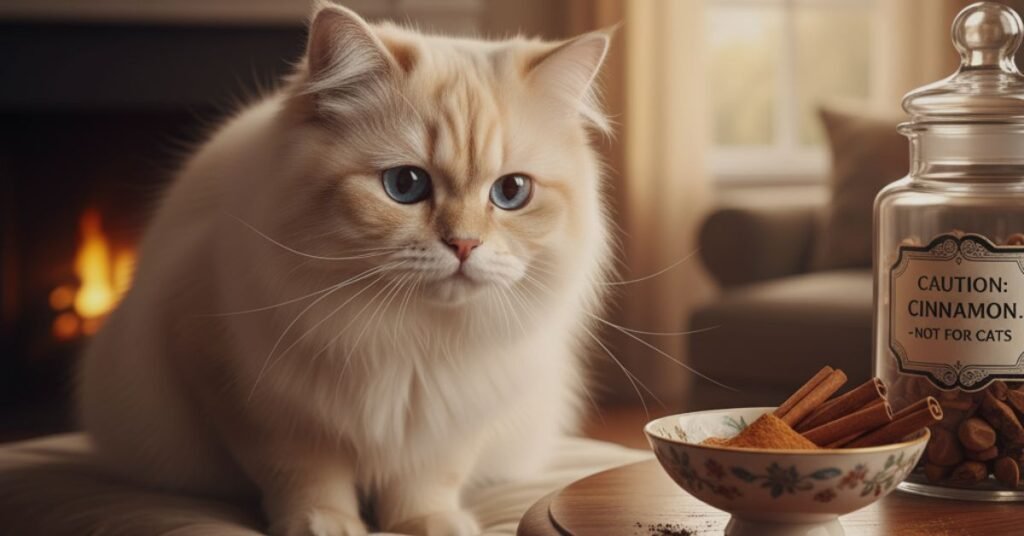
When I first caught my cat, Luna, curiously sniffing a cinnamon roll on my kitchen counter, my first thought was, “Uh-oh, is that safe for her?”
The sweet, spicy smell of cinnamon is irresistible to us, but it’s in everything from desserts to holiday candles. When it comes to our feline friends, things get a bit tricky.
Cats are naturally inquisitive, and if you’ve ever had a cat try to lick, sniff, or bat at something that smells strong or sweet, you know exactly what I mean. So, can cats eat cinnamon? The short answer is no, it’s not a safe treat for them.
Let’s dive deeper into why that is, what risks are involved, and what to do if your cat accidentally eats some.
Understanding the Curiosity of Cats
Why Cats Are Drawn to Strong Scents
Cats have an incredible sense of smell, much stronger than ours. Scents like cinnamon, nutmeg, or vanilla can easily capture their attention. While these aromas may seem inviting, your cat doesn’t understand the potential dangers behind them.
Sometimes, cats are simply drawn to new scents because of curiosity rather than hunger. So, when you see your cat sniffing cinnamon powder or baked goods, they’re not trying to “eat” it, they’re investigating it.
How Cats Explore the World Through Smell
Unlike humans who rely heavily on taste, cats use scent as a primary sense to explore their environment. They’ll often lick or nibble something just to identify it. Unfortunately, that’s where the trouble begins when it comes to cinnamon.
Even a small lick of powdered cinnamon can irritate a cat’s mouth and throat, causing discomfort or even toxicity in larger amounts.
Can Cats Safely Consume Cinnamon?
Is Cinnamon Safe or Toxic for Cats?
According to the ASPCA and several veterinary sources, cinnamon is considered toxic to cats when consumed in moderate to large quantities. The compound responsible is coumarin, a naturally occurring substance that cats cannot metabolise properly.
In small traces (like sniffing a cinnamon-scented candle), it may not cause serious harm, but ingestion can lead to health problems. So, while cinnamon isn’t instantly deadly, it’s definitely unsafe for your cat to eat.
Why Cinnamon Isn’t a Typical Cat Treat
Cats are obligate carnivores, meaning their diet should consist mainly of animal protein. Their bodies aren’t designed to handle many plant-based compounds, cinnamon included. Even if your cat seems fine after a small lick, it doesn’t mean it’s harmless.
Over time, even low exposure can cause irritation or organ strain. Instead of risky treats like cinnamon, you can try offering a lick of cooked chicken or tuna as a safer snack.
What Veterinarians Say About Cinnamon for Cats
Veterinary experts agree that cinnamon is best kept away from cats altogether. Both powdered cinnamon and cinnamon essential oils can cause toxic reactions ranging from vomiting to liver damage.
If your cat accidentally consumes it, call your vet or the ASPCA Animal Poison Control Center right away.
How Often Can a Cat Eat Cinnamon?
Occasional Exposure vs. Regular Feeding
If your cat merely sniffs a cinnamon roll or walks past a candle, there’s no need to panic. Occasional exposure through smell is unlikely to harm them. But regular or accidental ingestion, even small amounts, can build up toxins in their body.
Cinnamon doesn’t belong anywhere in your cat’s diet, not even as a “tiny taste.”
Hidden Sources of Cinnamon in Foods
Many foods contain hidden cinnamon, from cereals and cookies to baby food and baked treats. Always check ingredient lists before sharing human snacks with your cat.
Pro tip: Keep cinnamon-flavored foods out of reach. Cats love to swipe baked goods off counters, and those sweet treats often contain more cinnamon than you’d expect.

Can Cats Eat Cinnamon Rolls, Donuts, and Biscuits?
Cinnamon Rolls and Baked Goods
While that gooey cinnamon roll smells like heaven to you, it’s a poor choice for your feline friend. Cinnamon rolls are packed with sugar, butter, and spice, none of which belong in a cat’s diet. Even a small bite could upset their stomach or expose them to too much cinnamon.
Cinnamon Donuts and Sugary Treats
Cinnamon donuts combine two major cat no-nos: sugar and cinnamon. Sugar offers zero nutritional value for cats and can lead to obesity and diabetes if consumed often. Add in the cinnamon, and it’s a recipe for discomfort or toxicity.
Cinnamon Biscuits and Coffee Cake
These baked goods often contain cinnamon and nutmeg, both of which are dangerous for cats. Even licking crumbs could irritate their digestive system. If your cat has a sweet tooth moment, distract them with a cat-safe treat instead.
(You can even make feeding time fun by giving your cat a unique name using our Cat Name Generator, perfect for their next playful adventure.)
Cinnamon Related Risks for Cats
Digestive Issues and Irritation
The most common reaction after a cat eats cinnamon is stomach upset, vomiting, diarrhea, or drooling. Cinnamon powder can also cause mouth irritation or a burning sensation.
Liver Problems and Toxic Reactions
Since cats can’t metabolize coumarin, it can accumulate in their liver, potentially leading to toxicity. Over time, this may cause weakness, jaundice, or even liver failure in severe cases.
Risk from Inhaling or Touching Cinnamon
Powdered cinnamon can irritate your cat’s respiratory tract. If they inhale it, they might start coughing or sneezing excessively. Topical contact (like brushing against a spilled cinnamon pile) can also cause skin redness or rashes.

Types of Cinnamon
Powdered Cinnamon
Common in kitchens, powdered cinnamon is one of the easiest for cats to access, and one of the most harmful. Even a lick can cause irritation.
Cinnamon Essential Oil
Highly concentrated and very toxic to cats. If diffused or spilled near them, it can cause difficulty breathing, vomiting, and even neurological symptoms.
Cinnamon Broom
Often used as seasonal decor, cinnamon brooms release strong scents that can irritate a cat’s airways. It’s best to keep these away from places your cat lounges or sleeps.
Cinnamon Candles
While the candle wax itself isn’t usually toxic, the scent oils released can bother sensitive cats. Prolonged exposure might trigger coughing or watery eyes.
Cinnamon Sticks
Though less potent than oils, chewing on a cinnamon stick can still cause oral burns or choking hazards. Keep them out of your cat’s reach.
Signs of Cinnamon Toxicity or Allergic Reaction
Common Physical Symptoms
If your cat ingests cinnamon, you may notice drooling, vomiting, coughing, difficulty breathing, or skin redness. In more serious cases, they might appear weak or lethargic.
When to Contact a Veterinarian
Call your vet immediately if your cat shows any of the above symptoms. Try to bring along the packaging or a sample of what they ate — it helps the vet assess toxicity levels quickly.
What To Do If Your Cat Eats Cinnamon
Step-by-Step Actions to Take Immediately
- Remove any remaining cinnamon or food from your cat’s reach.
- Rinse their mouth gently with water if you can.
- Wipe off any powder or oil from their fur or paws.
- Call your veterinarian or the ASPCA Animal Poison Control Center for advice.
When Emergency Care Is Needed
If your cat has trouble breathing, continuous vomiting, or signs of distress, head to an emergency vet right away. Bring a sample of what they ingested if possible.
How to Prevent Future Incidents
Keep all spices, essential oils, and baked goods in sealed containers. Cats are natural explorers, so prevention is your best defense.
Final Thought
It’s natural to want to share your favorite treats with your furry friend, but cinnamon just isn’t one of those safe options. Cats don’t need it, and their bodies aren’t built to handle it.
Stick to cat-friendly snacks and keep cinnamon-flavoured foods safely tucked away. And if your cat ever surprises you with their curiosity, remember, their instincts to explore make them who they are, but it’s our job to keep that curiosity safe.
Pro Tip: Curious cats need stimulation. Try offering new toys or a cozy perch instead of human treats to satisfy their interest.
FAQ
Is cinnamon toxic to cats?
Yes. Cinnamon contains coumarin, which cats can’t process properly. Ingesting it can lead to vomiting, liver damage, or allergic reactions.
What happens if my cat licks cinnamon powder?
A small lick might cause mouth irritation or coughing. Larger amounts can be toxic, so always monitor your cat closely and contact a vet if symptoms appear.
Can cats eat cinnamon-flavored snacks?
No. Cinnamon-flavored foods often contain sugar, dairy, and other spices that are harmful to cats.
Is cinnamon essential oil safe around cats?
No. Cinnamon essential oil is highly toxic when inhaled or absorbed through the skin. Avoid diffusing or using it near your cat.
What spices are toxic to cats?
Besides cinnamon, nutmeg, cloves, onion powder, and garlic powder are all harmful to cats.
What should I do if my cat accidentally eats cinnamon?
Remove any leftover cinnamon, rinse their mouth, and contact your vet or the ASPCA Poison Control line for immediate advice.
