
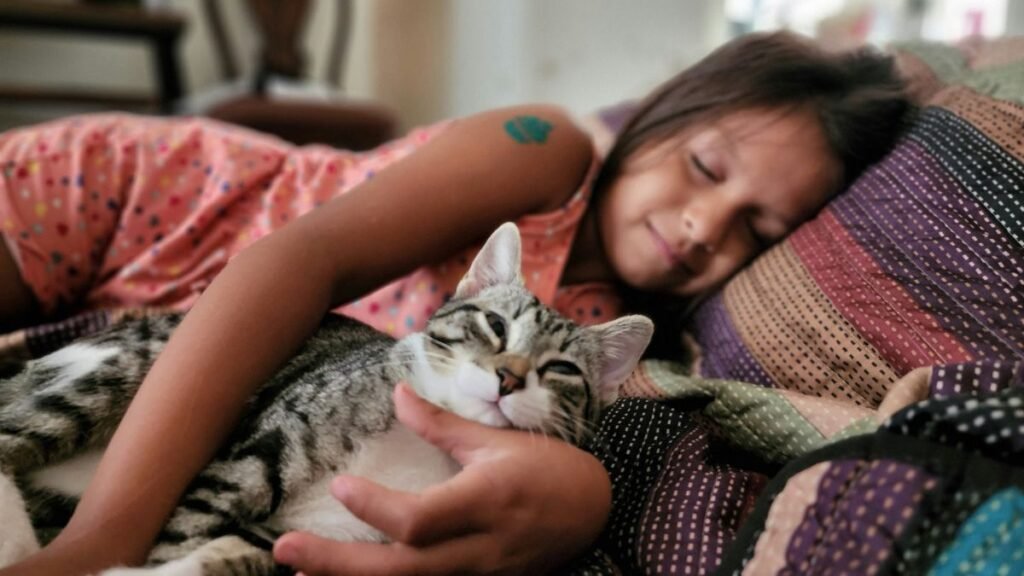
Have you ever watched your cat sleeping peacefully, only to notice their paws suddenly twitching, their whiskers flickering, or a soft little chirp escaping their mouth? It is one of the most endearing things a cat owner gets to witness. And naturally, you find yourself wondering: is my cat dreaming right now?
The answer is almost certainly yes.
Cats do dream. Science backs it up. And when you understand what is happening inside your cat’s sleeping brain, you will never look at a cat nap the same way again.
In this post, we are going to explore everything you need to know about cats and dreams, from the science of feline REM sleep to what cats are likely dreaming about, and whether you might actually be starring in their nightly adventures.
Quick Overview
| Topic | Key Takeaway |
|---|---|
| Do cats dream? | Yes, cats experience REM sleep and dream like most mammals |
| How often do cats dream? | Cats enter REM sleep roughly every 25 minutes during sleep |
| What do cats dream about? | Daily experiences, hunting, play, and their human companions |
| Do cats dream about their owners? | Very likely, especially cats with strong human bonds |
| Do cats have nightmares? | Yes, particularly after stressful or frightening experiences |
| Signs of dreaming | Twitching paws, ear flicks, whisker movement, soft vocalisations |
| Should you wake a dreaming cat? | No, it can disorient them or cause them to lash out |
Do Cats Dream?
Yes, cats dream. This is not just a charming thought, it is supported by sleep science.
Like humans and most other mammals, cats cycle through different stages of sleep. These include light sleep, deep sleep, and REM sleep, which stands for Rapid Eye Movement. REM sleep is the stage where dreaming happens in both humans and animals.
During REM sleep, a cat’s brain becomes highly active, almost as active as when it is fully awake. You can sometimes even see their eyes moving beneath closed eyelids. This is the dreaming phase.
Research has consistently shown that cats experience REM sleep cycles. And because the brain activity during these cycles closely mirrors what we see in humans while dreaming, scientists confidently conclude that cats do indeed dream.
One fascinating difference between cats and humans is the frequency of REM cycles. While humans typically enter REM sleep about every 90 minutes, cats reach that deep dreaming stage roughly every 25 minutes. This means your cat is likely dreaming multiple times during every single nap, including the short ones.
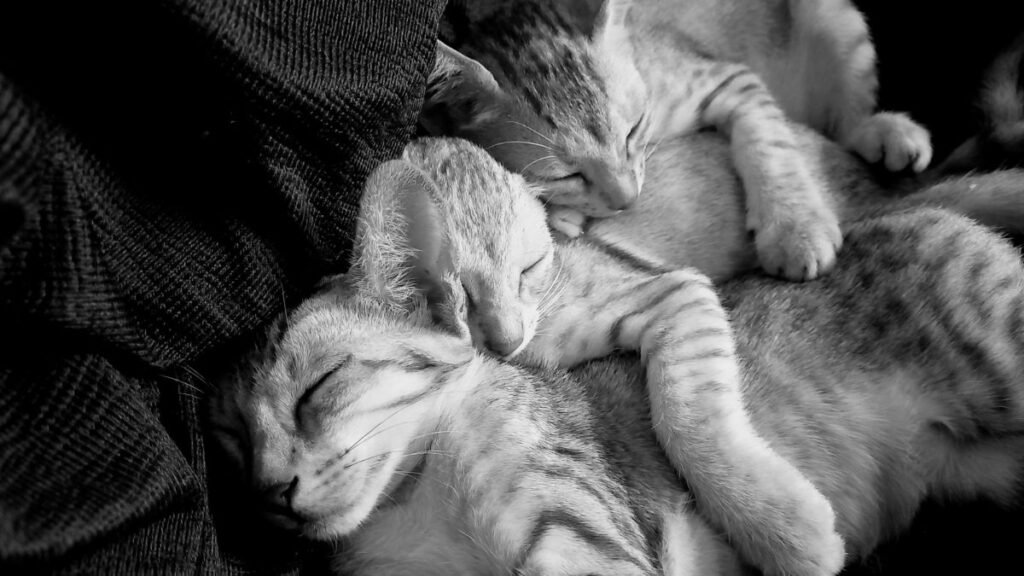
Signs Your Cat Is Dreaming
You do not need lab equipment to know when your cat is in dreamland. Their sleeping body tells the story.
Here are the most common signs that your cat is actively dreaming:
| Sign | What It Means |
|---|---|
| Paw twitching | Possibly “running” or “swatting” in a dream |
| Ear flicking | Reacting to sounds within the dream |
| Whisker movement | Sensing something in their dream environment |
| Tail flicking | Excitement or agitation during a dream scenario |
| Soft chirps or meows | Social dreaming, possibly interacting with you or another pet |
| Rapid eye movement under lids | Classic sign of active REM sleep and dreaming |
| Faster or irregular breathing | The brain is working hard, processing dream activity |
| Sudden muscle twitches | The body briefly “acting out” dream movements |
If you see two or more of these signs at once, your cat is almost certainly deep in dreamland.
One important note: if you notice very extreme or violent movements, stiff limbs, arched back, or repetitive thrashing, that could be a sign of a seizure rather than dreaming. In that case, contact your vet.
What Do Cats Dream About?
This is the question every cat owner wants answered. While we cannot ask our cats directly and no technology yet exists to read feline dreams, researchers have made educated conclusions based on sleep science, behavioural observations, and studies on other animals.
Here is what cats are most likely dreaming about:
| Dream Theme | Why Experts Believe It |
|---|---|
| Hunting and chasing prey | Michel Jouvet’s REM study showed cats acting out hunting during sleep |
| Daily play and exploration | Dreams appear to replay the day’s experiences, just like in humans |
| Their human companions | Cats with strong human bonds likely dream of those interactions |
| Other pets in the home | Social relationships are believed to feature in feline dreams |
| Food and mealtime | Core daily activities are natural dream material |
| Familiar smells and sounds | Cats may dream in richer sensory detail than humans, including smell |
| Nesting and comfort | Cats may dream of favourite sleeping spots or cosy routines |
One of the most interesting theories is that cats may actually dream in a multi-sensory way. Because smell is such a dominant sense for cats, researchers believe their dreams may feature scents more vividly than visual images, something quite different from how most humans dream.
This means your cat’s dream of you might not look like you, it might smell like you.
If you want your cat to have richer and more enjoyable dreams, give them a full, stimulating day. Wand toys, treat-dispensing puzzles, window perches for bird watching, and interactive play sessions all give the sleeping brain more exciting material to work with. You can even explore unique cat names for a cat that has a personality as vibrant as their dream life.
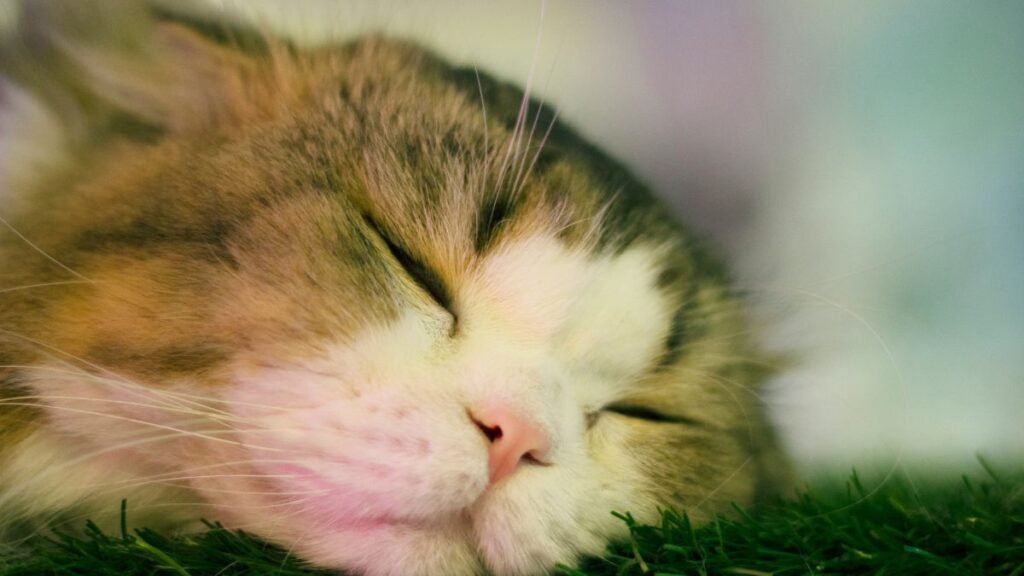
How To Tell If Your Cat Is Dreaming
Knowing the difference between light sleep and active dreaming can be helpful, especially if you are ever concerned about unusual sleep behaviour.
| Sleep Stage | What You Observe |
|---|---|
| Light sleep | Cat is relaxed but reacts to sounds and movement around them |
| Deep NREM sleep | Body is very still, breathing is slow and regular, hard to wake |
| REM sleep (dreaming) | Twitching, eye movement, soft sounds, irregular breathing |
| Hypnic jerks (sleep start) | A sudden full-body jolt when first falling asleep, totally normal |
REM sleep in cats begins quite quickly after they fall asleep, usually within 20 to 25 minutes. Each REM cycle lasts only around 2 to 3 minutes before shifting back into other sleep stages. This cycle repeats many times throughout a nap.
Kittens spend significantly more time in REM sleep than adult cats. This makes sense because they are processing enormous amounts of new information every day. Senior cats also tend to sleep more overall, giving them more total dream time.
If you want to observe your cat dreaming, wait about 20 to 30 minutes after they fall asleep, then watch quietly without disturbing them. You will often catch the gentle twitches and expressions that reveal an active dream in progress.
Why Do Cats Twitch in Their Sleep?
Sleep twitching is one of the most frequently asked questions among cat owners, and it has a clear scientific explanation.
During REM sleep, the brain sends signals that temporarily paralyse the major muscle groups. This prevents animals and humans from physically acting out their dreams. However, smaller muscles are not fully suppressed, which is why you see those subtle paw movements, ear flicks, and whisker wiggles.
| Type of Movement | Likely Dream Activity |
|---|---|
| Paw batting or running motion | Chasing or playing with prey or a toy |
| Whisker twitching | Sensing something nearby in the dream |
| Ear rotating | Listening to sounds within the dream |
| Tail flicking | Emotional response to a dream scenario |
| Mouth movement | Grooming, nursing, or eating in a dream |
| Full body twitch | A larger dream movement that briefly breaks through |
These twitches are completely normal and actually reassuring. They show your cat is getting quality REM sleep, which is vital for memory processing, emotional wellbeing, and physical recovery.
The brain’s REM paralysis system is why your cat does not leap off the sofa mid-dream to actually chase that imaginary mouse. Their body knows they are dreaming, even if they do not.
If you have noticed your cat doing funny things in their sleep, you are not alone. This behaviour has inspired plenty of silly cat names for cats with the most dramatic sleep performances.
Research About Cats and Dreams
The science behind feline dreaming is genuinely fascinating, and it dates back further than most people realise.
| Research | Finding |
|---|---|
| Michel Jouvet, 1960s | Cats with damaged brainstem (pons) acted out hunting during REM sleep while still asleep |
| Rat maze studies (MIT) | Rat brainwaves during REM sleep mirrored activity during maze navigation, suggesting dreams replay experiences |
| Harvard researcher Dr. Deirdre Barrett | Animals may dream in richer sensory formats than humans, potentially including smell and sound more vividly |
| Feline sleep cycle studies | Cats enter REM every 25 minutes, far more frequently than humans (every 90 minutes) |
| Hippocampus activity studies | The memory-processing region of the brain is highly active during cat REM sleep, supporting the theory that dreams consolidate memories |
The Jouvet study is particularly compelling. When the part of the brain responsible for REM muscle paralysis (the pons) was removed from cats, the sleeping animals began physically acting out their dreams. They pounced. They swatted. They stalked invisible prey. All while completely asleep.
This is powerful evidence that cats are not just twitching randomly but are genuinely experiencing something during sleep.
Do Cats Dream About Us?
This is the question that melts every cat lover’s heart. And the answer, based on everything we know, is very likely yes.
Cats form real emotional bonds with their humans. Multiple studies and behavioural experts confirm that cats recognise their owners’ voices, scents, and routines. These bonds are emotionally meaningful to cats, even if they express them differently from dogs.
| Factor | Evidence That Cats Dream of Their Owners |
|---|---|
| Daily experience replay | Dreams appear to reconstruct daily events, and for most cats, interactions with their owner are the highlight of the day |
| Strong sensory memory | Cats have powerful scent memory, and your smell is deeply familiar to them |
| Social bonding behaviour | Cats with close human bonds show more relaxed sleep, suggesting positive emotional associations |
| Veterinary consensus | Most vets and cat behaviourists believe companion animals dream of those they are bonded with |
Cat behaviour consultant Mikel Delgado, a postdoctoral fellow at the UC Davis School of Veterinary Medicine, has stated that cats likely dream about their daily experiences and that would almost certainly include the humans or animals they live with.
So yes, there is a good chance you are in your cat’s dreams tonight. Whether you are feeding them, playing with them, or simply sitting nearby while they watch you from across the room, those moments matter to your cat, and they may live on in their dreams.
The bond between a cat and their owner often starts with something as simple as a name. If you are still looking for the perfect name for your feline companion, our cat name generator on CatifyNext can help you find a name that truly fits their personality. You might also love exploring our full cat names A to Z guide for inspiration.
Do Cats Have Nightmares?
Yes, cats can have nightmares. Just like humans, a cat’s dream life is not always pleasant.
If your cat has had a stressful, frightening, or painful experience, that experience is likely to find its way into their dreams. A cat who had a vet visit, a clash with another animal, or even a loud and frightening noise during the day may relive some version of that experience while sleeping.
| Signs of a Possible Cat Nightmare | What To Do |
|---|---|
| Growling or hissing during sleep | Do not wake them, let the dream pass |
| Whimpering or crying sounds | Stay close and speak softly once they wake naturally |
| Sudden waking with wide eyes or puffed fur | Offer calm reassurance and gentle proximity |
| Aggressive behaviour when woken | Never startle a dreaming cat awake |
The most important advice: do not wake your cat if you think they are having a nightmare. A cat woken suddenly from deep REM sleep can become disoriented, frightened, or even scratch or bite reflexively before they realise where they are. The dream will pass on its own and will not cause them any lasting harm.
If your cat wakes and seems distressed, sit quietly nearby and let them come to you. A calm voice and familiar scent go a long way. The best prevention for bad dreams is simply giving your cat a positive, enriching, and low-stress daily life.
If you notice that your cat frequently seems distressed during sleep or wakes in apparent panic regularly, it may be worth mentioning to your vet, as chronic stress can affect sleep quality and overall wellbeing. Understanding your cat better can also help, and posts like our piece on why cats loaf and why cats lick you can help you tune into what your cat is communicating.
Why Pets Matter to CatifyNext
At CatifyNext, we believe that understanding your cat on a deeper level is one of the greatest gifts you can give them.
When you understand that your cat dreams, that they may be replaying moments you shared, that their twitching paws mean they are safe and deeply asleep, it changes the way you see them.
That is what we are here for.
From helping you find the perfect name for your cat with our intelligent Cat Name Generator, to sharing insights about feline behaviour and wellbeing, CatifyNext is your home for everything that helps you connect more deeply with your favourite furry companion.
Because every cat deserves an owner who truly gets them.
Final Thoughts
So, do cats dream? Absolutely.
Your cat spends up to 16 hours a day sleeping, and during many of those hours, their brain is busily replaying the day, reinforcing memories, processing emotions, and quite possibly dreaming of you.
The twitching you see is not random. The little chirps and paw movements are a window into an active, rich inner life that your cat carries with them even into sleep.
The best thing you can do is make sure your cat’s waking life is full of good things to dream about. Play with them daily. Offer enrichment and exploration. Create a safe, comfortable sleeping space. And let them sleep undisturbed when they need it.
A happy cat, it turns out, has happy dreams.
Want to learn even more about your cat’s fascinating behaviour? Explore our posts on do cats cry, and discover how you can give your cat the best possible life every single day.
Frequently Asked Questions
Do cats dream every time they sleep?
Cats enter REM sleep approximately every 25 minutes during a sleep session, which means they likely dream during most naps, even short ones. However, very brief snoozes of just a few minutes may not reach the REM stage at all.
How long do cat dreams last?
Each REM cycle in a cat lasts roughly 2 to 3 minutes. Over the course of a longer sleep session, a cat may cycle through REM multiple times, meaning their total dream time can add up to quite a few minutes per nap.
Do kittens dream more than adult cats?
Yes. Kittens spend more time in REM sleep than adult or senior cats. This is thought to be because they are processing large amounts of new information every day and need more dream time to consolidate those experiences and memories.
Can I tell what my cat is dreaming about by watching them?
You can make educated guesses. Paw twitching often suggests running or swatting, which points to a chase or play dream. Soft meows may indicate a social dream. Mouth movement might suggest eating or grooming. While you cannot know for certain, your cat’s sleep movements give meaningful clues.
Should I wake my cat if it seems like they are having a nightmare?
No. It is best to let the dream run its course. Waking a cat suddenly from deep REM sleep can disorient them and may cause them to lash out defensively. Once they wake naturally, offer quiet reassurance if they seem unsettled.
Do cats dream in colour?
Cats see a more limited colour range than humans, primarily shades of blue, grey, green, and yellow. It is generally believed that if cats dream visually, they dream within that same colour spectrum.
Does enrichment during the day affect what cats dream about?
Quite possibly yes. Since dreams appear to replay daily experiences, a cat that had an active, stimulating day with play, exploration, and positive social interaction is likely to have more positive dream material to work with than a bored or stressed cat.
Do all cat breeds dream the same way?
There is no strong evidence that dreaming differs significantly across breeds. All domestic cats share the same sleep cycle structure. However, highly active or intelligent breeds may have particularly vivid dream behaviour due to more stimulating daily experiences.
